
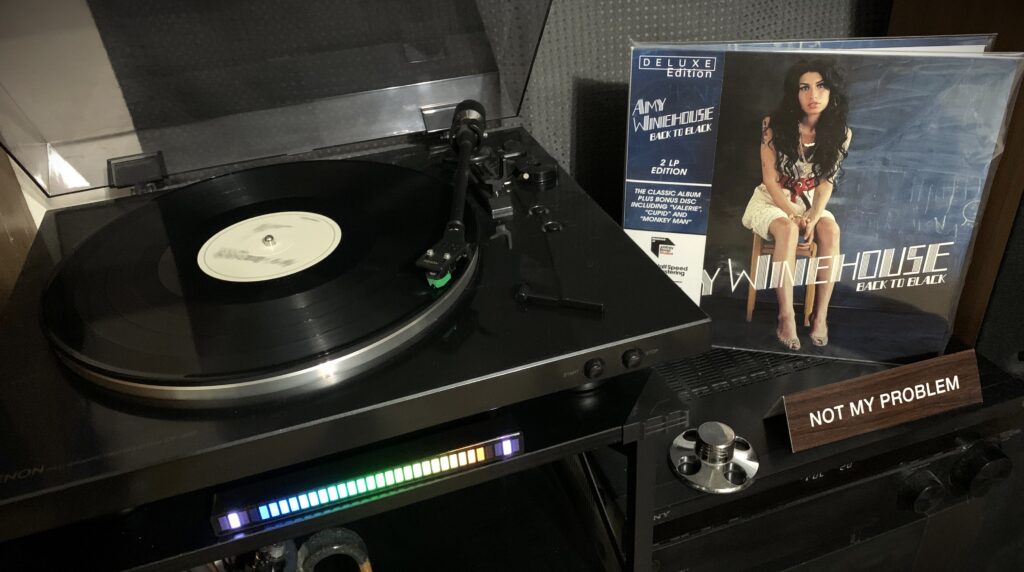

Amy Winehouse – Back to Black – Abbey Road Deluxe

I was VERY late to the game with Amy Winehouse. My first time truly hearing anything from her was when I bought a small vinyl collection off Facebook marketplace back around 2020. My tastes were beginning to evolve to a point where I was enjoying female voices in music far more than I had previously so the timing was perfect for “Back To Black” to land on my turntable. 

I became immediately obsessed with her voice and the album, and started digging into her tragic story that ended with her being one of the “27” club

Knowing she was the songwriter and not just the singer, and that the album served as such a document to her life and struggles during that time made it hit home so much moreso.

She reminds me of Raye, another fantastic current singer-songwriter also from London that has often been compared to Amy.

Release Details:

The Abbey Road half-speed remaster of Amy Winehouse’s Back to Black was officially released on October 12, 2018 with a subsequent worldwide reissue late in 2021, and is generally considered the definitive way to experience the Back to Black era because it captures the diverse musical styles she was experimenting with during those sessions.


The Critics’ Take:

The initial reviews were hailed as a “breath of fresh air” in a landscape of manufactured pop.

Outlets like Rolling Stone and The Guardian praised the production by Mark Ronson and Salaam Remi for its “Phil Spector-esque” wall of sound. They noted that it felt like a classic Motown record but with the “urban grit” of 21st-century London.

The Deluxe Edition (typically the 2-CD set or the 2-LP expanded version) was viewed as a vital “completionist” piece rather than just a cash grab.

The critical consensus was that the extras were actually strong enough to have been on the main album. One standout track is “Valerie”. The Zutons original came out in 2002 and was a modest UK hit. Amy’s version didn’t just cover it — it essentially erased the original from public memory. Her cover of “Cupid” (Sam Cooke) was also singled out for its authentic ska/reggae influence.
 

The Bottom Line

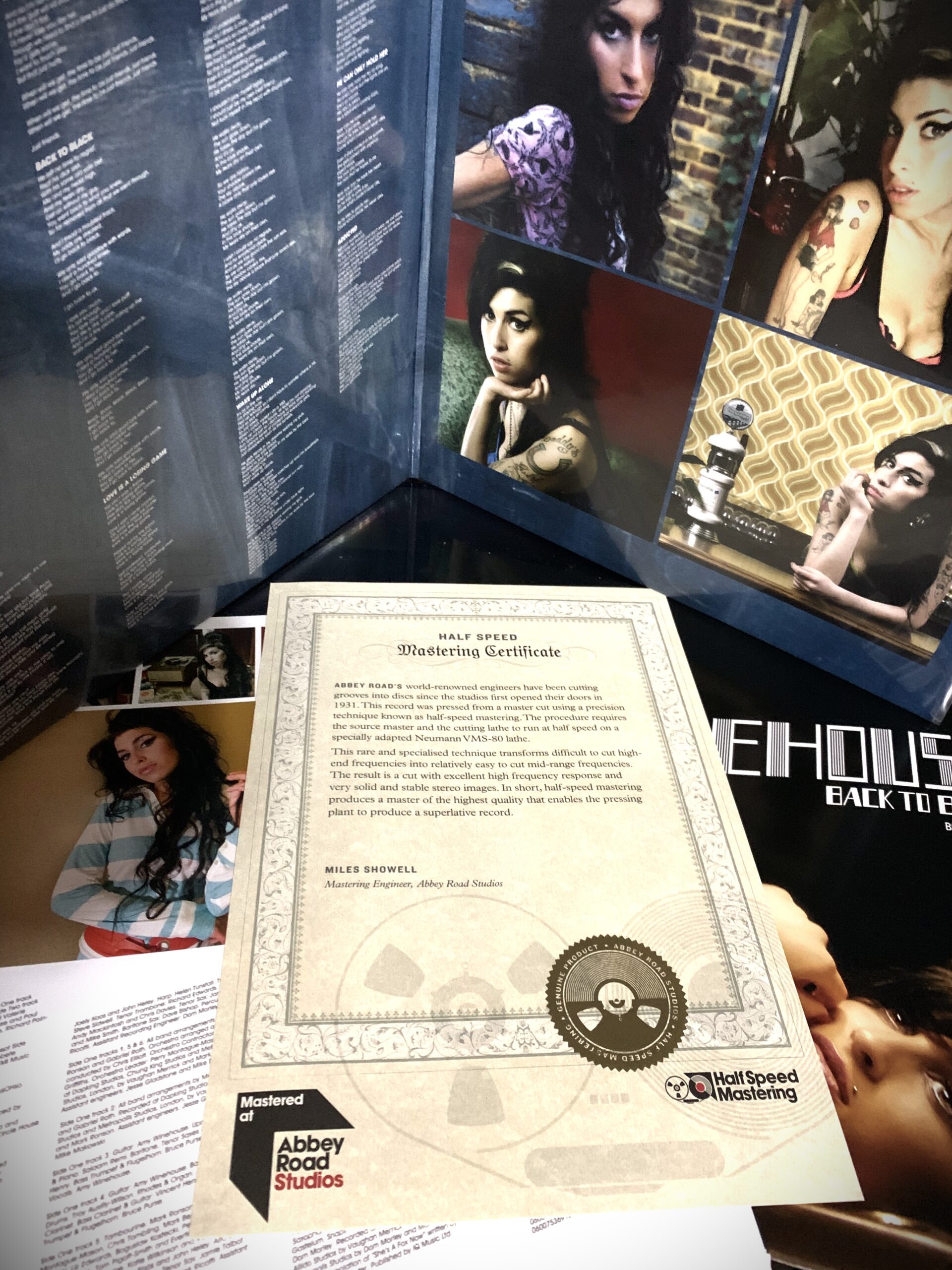
I agree wholeheartedly that the Deluxe version is the one to have. I don't even own the original pressing anymore. Plus the packaging, with the printed inner sleeves and gatefold showing some amazing photos of Amy as well as a printed half-speed mastering certificate from the mastering engineer: Miles Showell are extremely well done and help create just an ideal overall package.  If you're a fan of the regular album, it's worth seeking out this expanded, remastered version, either on vinyl or cd. Though vinyl really is the preferred method to experience this one! You truly get an "in the room with them" warmth on these tracks. Stellar, intimate, and powerful from first track to final outro.


More on The Releases:

The "Taxi Test" for Audio Quality

Amy was a notorious perfectionist regarding how her music sounded in the real world. To test the final mixes, she would burn them onto CDs and play them in her father’s taxi. She believed that if the songs sounded good while battling the ambient noise of London traffic, they were ready for the public.

The iconic chorus for “Rehab” wasn’t written during a formal session. While walking down the street with producer Mark Ronson, Amy offhandedly mentioned that her family had tried to make her go to rehab and she told them, “No, no, no.” Ronson immediately recognized the rhythm of the phrase and urged her to turn it into a song.

To achieve the vintage, 1960s “Wall of Sound” aesthetic, Ronson brought in the Dap-Kings (the backing band for soul singer Sharon Jones). Interestingly, the band and Amy recorded much of the album in a single room with minimal modern technology to capture a raw, “live” energy.

For the US release of the album, the lead single wasn’t “Rehab,” but “You Know I’m No Good.” This version featured a guest verse from Wu-Tang Clan member Ghostface Killah, a move intended to help bridge the gap between Amy’s retro-soul sound and the American hip-hop scene.

The album was written primarily during a period of intense grief after Amy’s then-boyfriend, Blake Fielder-Civil, left her. Despite its tragic origins, the album became a massive commercial juggernaut, at one point becoming the best-selling album of the 21st century in the UK (a title eventually taken by Adele’s 21).

Scroll to Top