Every Friday, Spotify hands me the same problem.
Release Radar shows me new music from artists I already follow. Which is fine, as far as it goes. But it can’t show me anybody new — that’s not what it’s built for. New Music Friday, on the other hand, is a hundred-track firehose, and most of it isn’t for me. Somewhere between those two playlists, I knew there were artists I’d love. I just never had time to go digging for them.
So I connected my Spotify account to my AI assistant, Muse, and put it to work.
Here’s what that actually looks like — what it can see, what it can do, and where it runs into a wall.
What’s actually connected
There’s no special music mode. Muse is connected to my Spotify the same way it’s connected to my calendar and my email, and that connection lets it:
- Search the whole catalog — songs, albums, artists, playlists, podcasts, audiobooks
- See my library — my playlists, the artists I follow (477 of them, apparently), what I’ve saved
- Build and edit playlists — create new ones, add tracks
- Run playback — play, pause, skip, queue something up, turn it up or down
- Manage shows made with Save to Spotify
It also keeps track of what I actually listen to. It knows my current rotation leans hard toward female-fronted rock and pop punk. It knows Prince and The Cure sit at the top of my all-time list. And it knows my taste doesn’t stay in one lane — country to dance pop to metalcore, sometimes before lunch.
That’s not a party trick. That’s the whole reason this works.
What it’s built for me so far
Playlists to an exact spec. I asked for a road-trip playlist once — deep cuts only, none of the hits that radio and streaming have beaten to death. It nailed it. For my wife’s class reunion weekend, I asked for two and a half hours of 1982 to ’86 pop, post-punk and old-school R&B, sequenced like the school years, nothing you’d hear five times a week on satellite radio. It delivered exactly 150 minutes.
That’s not a shuffle button. That’s homework.
One-line requests. A remix dropped last week featuring one of my favorite artists — her first-ever guest feature, as it happens. I said “add the track.” It found the right version — not the karaoke one, not the piano cover — and added it.
A weekly discovery playlist. This is the one that fixed the original problem. Every week, Muse scans New Music Friday and Discover Weekly, throws out every artist I already follow or already have in my main playlist, and builds me a fresh list of 20 to 25 songs by people who were not on my radar, matched to my taste.
First test run, I got fourteen tracks deep without a single skip.
It even caught the flaw in my own plan: Release Radar contributed zero picks. Of course it did. It’s built entirely out of artists I already follow. I was asking the wrong playlist to surprise me.
The part where the AI explains itself
Because this is apparently the world we live in now, I asked Muse to explain the curation in its own words — and its own voice. This is not me reading a script. This is the assistant, narrating.
What it can’t do
I’d rather tell you the limits straight.
My main playlist is set to public, and the permissions on this connection only cover editing private playlists. So Muse can build me new playlists all day long, but it can’t add a track to that one. I can flip a setting, or spend ten seconds adding the song myself. That’s not a dealbreaker. That’s a permissions setting doing what permissions settings are supposed to do.
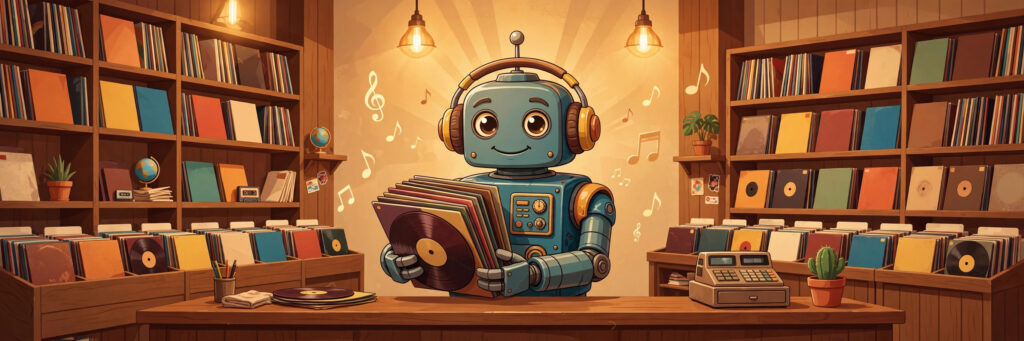
It also can’t remove songs from a playlist or rearrange them, which is why the weekly discovery list is a fresh playlist every Saturday instead of one rolling list that updates. Fine by me. A new list every week feels like a record store clerk setting aside a stack for you — which, when you think about it, is exactly what this is.
The thing I keep coming back to
Any app can shuffle songs. That’s not the hard part, and it never was.
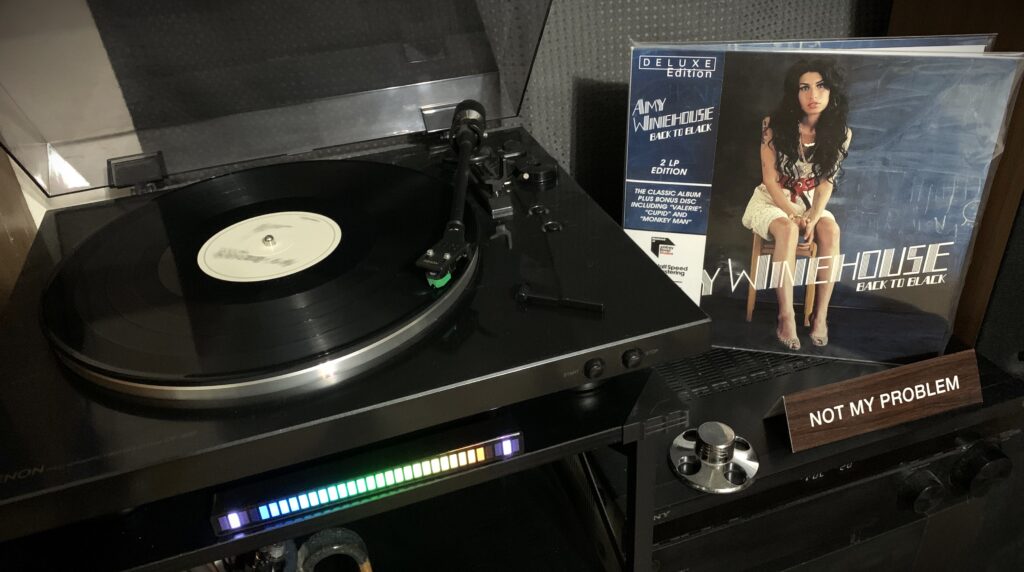
The hard part is context. This thing manages my calendar and my bills. It also knows I’ve collected vinyl for over a decade, knows which artists I play on repeat, and knows I banned the overplayed hits from my own playlists a long time ago. The recommendations land because it isn’t starting from zero every time I ask.
A good record store clerk knew your taste because he paid attention. Turns out that’s still the whole job. The clerk just changed.